Torres-Garcia, 2003-04, Museo Picasso, Barcelona.
A wide selection of works presents a complete survey of the career of artist and theoretician Joaquín Torres-García. A contemporary of Picasso's in Barcelona, with whom he frequented the artistic circles in the city at the turn of the century, Torres-García also wrote extensively on the language of twentieth-century art.
This monographic exhibition displays the work of Joaquín Torres-García, an artist and theoretician of twentieth-century art, contemporary of Picasso's. Torres-García arrived in Catalonia at the age of seventeen, and encountered a city, Barcelona, that was immersed in the creative frenzy of the first avant-garde movements. The richness of this moment opened the doors of modernity to Picasso and promoted Torres-García in the intellectual circles that were defining the new standards of Catalan art and culture, in which he would advocate the return to classicism: Noucentisme.
Through a wide selection of works, the discourse of the exhibition offers a complete survey of the evolution of Torres-García, from his renewing vision of classical tradition to what he called Constructive Universalism, in which the idea of abstraction emerged from a series of personal elements that referred to tangible reality and were also the genesis of a new artistic language.

Gallery view at the Museu Picasso, displaying paintings by Joaquín Torres-García from the 1930s.

Gallery view at the Museu Picasso, displaying paintings by Joaquín Torres-García from the 1910s.

Gallery view at the Museu Picasso, displaying murals from 1914 by Joaquín Torres-García from the 1930s.
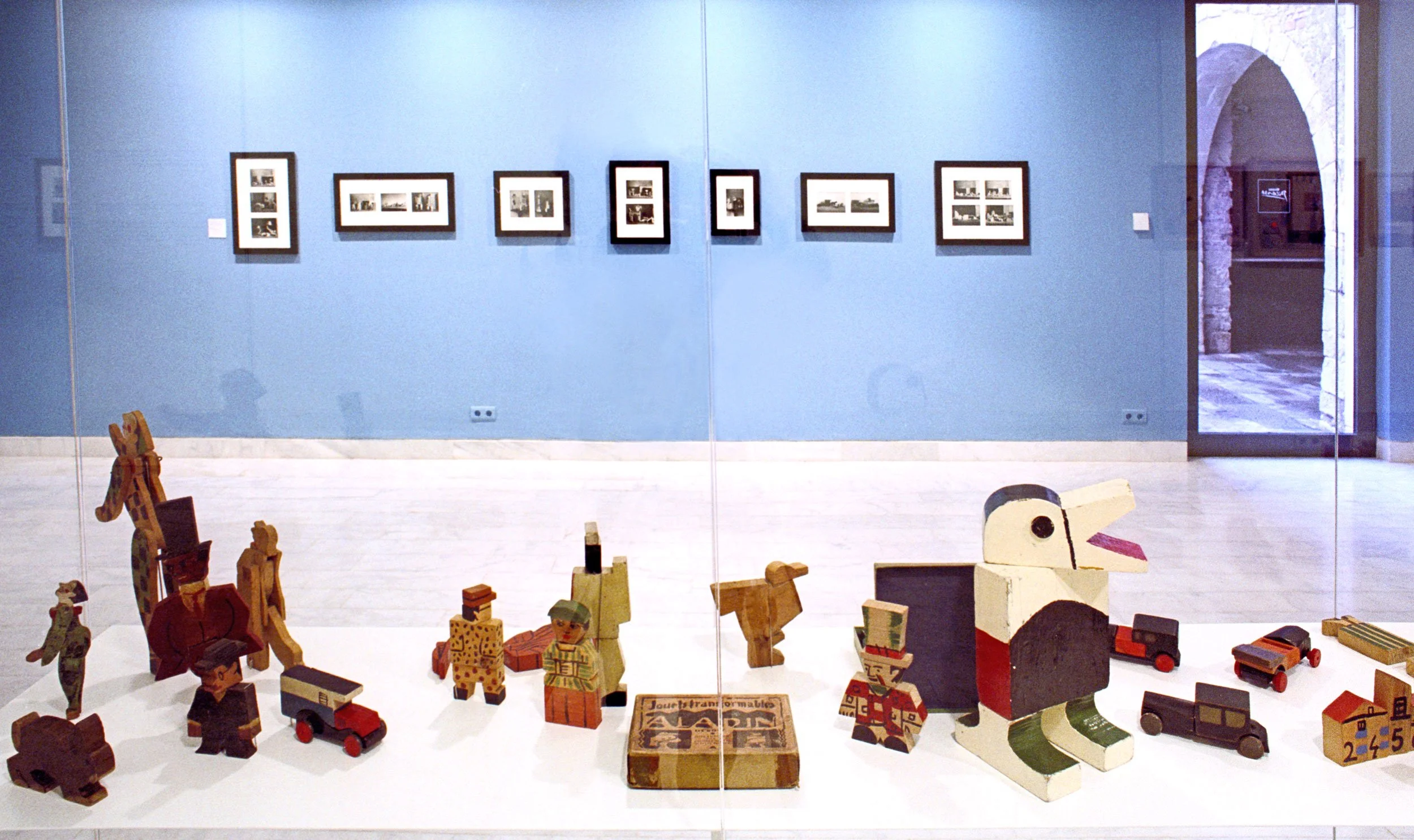
Display case with wooden toys at the Museu Picasso, by Joaquín Torres-García.

Artistic wooden sculptures arranged on display at the Museu Picasso, by Joaquín Torres-García.